
[Entrepreneurs Impact 10] Journey Quemara Louisville
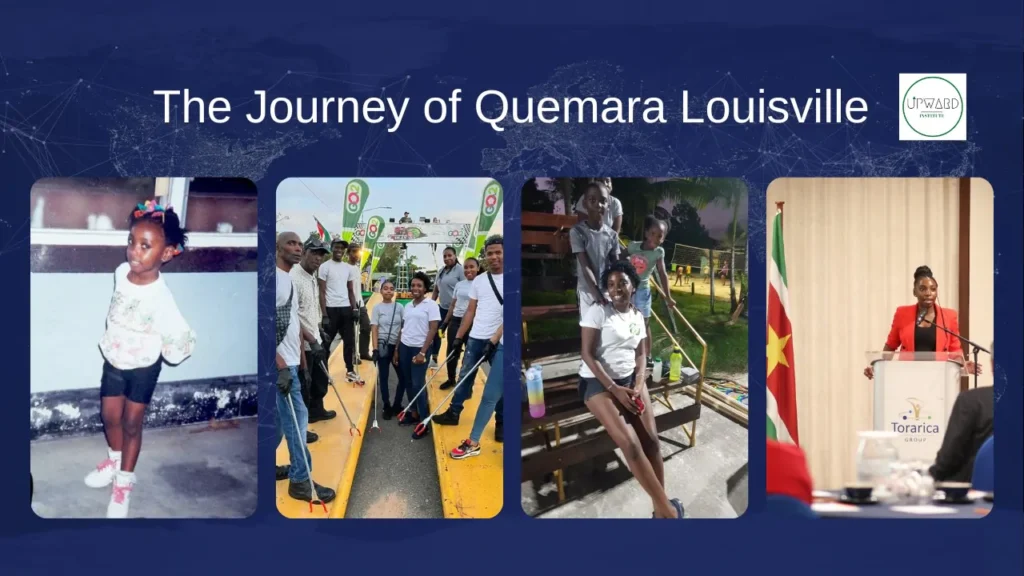
Childhood of Quemara Louisville Quemara Ramona Louisville was born on December 6, 1992, in Paramaribo, Suriname. She is the eldest child of her mother, Marcia Walden, and the only child of her father, Ramon Louisville. After being the only child for over 9 years and receiving all the attention and energy from her parents, Quemara had to adjust to having two younger sisters in the house. Describing herself as a calm young woman dedicated to love, helpfulness, and positivity, Quemara believes in finding something positive in everything one does. These values are not only imparted to her two children but to everyone she encounters in daily life, be it her sisters, family, colleagues, or students. Her childhood and adolescence were enjoyable for Quemara. She experienced a pleasant upbringing, playing on the streets with friends, and exploring her creativity. Despite a strict upbringing, Quemara had all her needs met, leading her to appreciate things from a young age. In her youth, she engaged in various sports, including Kung Fu lessons with her father and badminton at SCVU. Her father, a lifelong sportsman and retired FIFA referee, tried to interest her in the soccer world, even buying her soccer shoes as gifts. However, soccer did not resonate with Quemara, and she did not pursue a career as an arbiter. Having another child in the house after 9 years was an adjustment for Quemara. Despite initial challenges, she embraced her role with love and responsibility, vowing to support her sisters always. Quemara took the responsibility to simplify study materials for her sisters, so it would be less difficult for them to go through the educational journey, fostering a strong and supportive bond. Their agreement for life is to handle minor disagreements without escalating into major conflicts. As a dedicated student, Quemara did well in school and is currently in the final phase of the Bachelor of Business Administration program at Hogeschool ABC. Due to her competencies, she has been admitted to the Master’s Program in Accounting at FHR program through her work. Despite her calm attitude and academic focus, she was adopted by different peer groups in each class, keeping up a high standard of performance and resisting peer pressure. As the supportive individual that she is, she invested her afternoons and Saturdays supporting and guiding fellow students in subjects where they needed assistance, contributing to collective success in the final year exams. Her Impact From her teenage years, Quemara harbored the idea of becoming an entrepreneur, though she hadn’t yet determined the specific field. At the age of 15, she landed her most memorable summer job, archiving old videos and photos in the administration department. However, her creative and dynamic spirit quickly revealed that these tasks were not her calling. The television department staff noticed the discomfort and swiftly took action. Quemara was introduced to recording and editing tasks, leading her to work at Apintie for over 6 years. Later, she offered her services as a freelancer and gained additional expertise while employed at Intersnap, contributing to many enjoyable times and productions. Quemara started working at a young age, despite her father’s initial disapproval of a steady job. Eventually, she balanced work and studies, exploring various positions. The entrepreneurial spirit persisted, with Quemara constantly seeking ways to make her work her own and exploring freelancing possibilities. Later, Quemara and her mother and sisters started baking together. Observing her mother’s catering business provided insight into operations and planning, further fueling her entrepreneurial aspirations. Eventually, she recognized a demand for assistance with schoolwork and decided to turn it into a business after observing diverse enterprises. Thus, she began helping people at their homes for a small fee, leading to the conceptualization of Upward Institute. Upward Institute was officially launched on December 17, 2022. Offering academic support at all levels, it actively guides and assists students with their studies. Additionally, the institute provides courses on various subjects such as Presentation Techniques, Taxes, Professional Letters, Communication Skills, and more. The teachers, hailing from diverse fields, share their knowledge and skills with the people of Suriname. Upward Institute aims to make a positive impact on the growth and progress of mainly young Surinamese individuals, emphasizing not only education but also social and creative aspects through various organized activities. Quemara is not only the co-founder of Upward Institute but also the founder of KayJi Business Cleaning & Professional Services. Established on December 13, 2023, this cleaning company goes beyond cleaning by incorporating an academy, enabling industry job seekers to acquire skills that go beyond a lifetime of being a cleaner. In addition to her ventures, Quemara has a passion for design. She has designed reports, calendars, certificates, and other documents for various schools and businesses, leading to the creation of Impulse Communication & Marketing Hub. The company fosters communication and collaborations between businesses. Upward Institute is located at Alexander Samuelsstraat 36a in Paramaribo North. Growth through experience “Wang Ogri e Tjar Wang Bung.” As a budding entrepreneur, your life undergoes a transformation in the sense that you have to set things in motion and invest a considerable amount of time in your business, especially if you have a family and a job. Balancing all these aspects can be challenging. Sacrifices must be made, making it crucial for effective communication among all parties involved. Due to the busy nature of various enterprises, Quemara’s relationship suffered, eventually leading to its breakdown. Quemara channels negative thoughts and energy, particularly during stressful times and challenges, into positive energy, investing it in keeping her businesses running. In stressful situations, Quemara strives to focus on positive aspects to attract positivity. This approach has allowed her to dedicate more time and energy to her business, realizing the set goals that will offer Quemara and her children a promising future. Upward Institute has also experienced growth in the business. The number of students has increased from 6 to 20, availing themselves of Upward Institute’s services regularly. Subsequently, there was further growth from 20 to 35
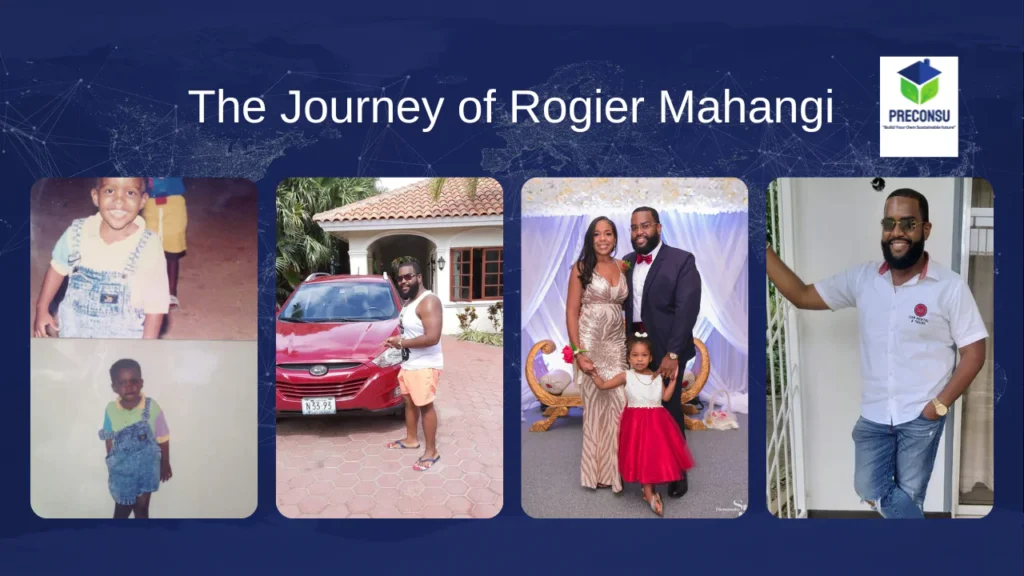
Childhood of Rogier Born on August 1, 1991, to Ingrid Jadi and Ramon Mahangi, Rogier’s family background is rooted in a blend of professional and entrepreneurial experiences. His father, Ramon Mahangi, served at Stichting Machinale Landbouw (SML) in charge of exports, While Ingrid, his mother, focused on being a full-time mother after first pursuing entrepreneurship. In 2015, Rogier tied the knot with his business partner, Vanessa Souda. Their connection traces back to their time at the MULO school, and for over 17 years, they have navigated life together, evolving from friends to life and business partners. Together, they have settled life’s journey, upgrading from friends to business partners. This love story has endured successes and challenges, evolving from youth to maturity and from boyfriend and girlfriend to husband and wife. Raising a daughter, they enjoy the joys of Parenting together. Rogier and Vanessa are an example of a successful relationship, both personally and professionally, breaking the stereotype that couples cannot manage a successful business together. Rogier was born and raised in Tammenga, a neigbourhood in the capital of Suriname. He understands the value of having strong cultural roots. Apart from their joint commercial ventures. For Rogier, understanding one’s origins is crucial, forming an integral part of one’s identity. He believes that as you grow, you discover there is more to life beyond the initial religious teachings received at home. Growing a broader perspective becomes essential. Guided by his cultural background, Rogier incorporates daily quotes into his life philosophy. One such phrase is “Esi fu sjie, ma no esi fu piki,” translating to ‘observe before making a statement or taking actions.” Another principle he lives by is “A ati bron fu tide, leb’en gi tamara,” encouraging the practice of letting emotions settle before responding calmly at a later time. Recognizing that impulsive actions may result from stronger emotions, Rogier emphasizes the importance of a measured approach. Furthermore, his mantra “Te y’e nyang, nyang naga trawan” reinforces the idea of sharing, emphasizing the collective nature of community and cooperation. These principles, deeply rooted in Rogier’s upbringing and experiences, shape his approach to life and guide his interactions with the world. Growing up in Tammenga, Rogier’s childhood was a mix of wonder and joy. In a bustling family of three brothers and one sister, he delighted in the connection, surrounded by the hustle and bustle of business-minded siblings. With their strong bond, they still support each other and fill the gaps where necessary. His early years were filled with excitement through family vacations, energetic games with neighbors, and more. Rogier’s educational journey started in kindergarten at the Prakiki School, went to primary school at Polanenschool, and finished with MULO at Christus Koning School. As he progressed through his schooling, he attended the Algemene Middelbare School (AMS) for his college education before continuing his studies at the IBW University of Applied Sciences to earn an HBO degree. Lastly, at the AKAMA University, he obtained his Bachelor of Science in International Business. From Superhero to Human Rogier once perceived his parents, particularly his father, as superheroes. However, at the tender age of 16, life dealt him a transformative blow when his father suffered a stroke. Witnessing his idol’s vulnerability, Rogier confronted the harsh reality that even superheroes had flaws. This challenging period deepened the bond between father and son, and Rogier took on the joint role of caregiver. In the final months leading up to his father’s passing, they had heartfelt father-son moments together, intense. Despite the pain of loss, Rogier found comfort, knowing his father was finally free from suffering. The everlasting spirit and determination exhibited by his father, Ramon Mahangi, left an enduring impact. Even on his deathbed, Ramon blessed Rogier to forge ahead, carrying invaluable lessons and guidance into every aspect of his life. Rogier’s entrepreneurial spirit flourished from his school days. Known for his trademark of always smelling good, he leveraged this quality to kickstart his business, initially selling perfumes and DVDs while still in school. After A period of time in government service, Rogier realized he had reached his ceiling. In collaboration with his partner, Vanessa Mahangi, they ventured into the import/export of cosmetics, eventually establishing their own cosmetic company in 2015. Their enterprise, Scents of Essence (SoE), extended to diverse branches, including an online marketing platform and a Ritual Shop in Connection Mall. Alongside these ventures, Rogier and his partner delved into the car rental business in 2017, starting with one car and swiftly expanding to three within a few months. The Car Rental operation, growing both locally and internationally, extended its reach to Curaçao, Guyana, and Barbados. Rogier became a shareholder in his brother’s company “AIM Industrial Solutions” focused on construction and electrical installations, later rebranded as Preconsu, a construction company specializing in prefab constructions, renewable energy, and sustainable living. Expanding its wings internationally, Preconsu is making its mark in countries like Guyana and Barbados. Driven by his passion for cars, Rogier ventured into car rentals, while the construction company, fueled by a response to demand, aims to address housing shortages in Suriname. With a focus on providing sustainable homes for young professionals, Preconsu has evolved to meet the needs of entrepreneurs seeking office spaces, catering to those facing challenges of land ownership or insufficient capital. His Impact The first thing to take into consideration before taking action is the Sustainable Development Goals (SDGs). For Preconsu, a project goes beyond the typical frameworks of a building company; it is also a Green Investment Foundation dedicated to balancing environmental and human environments. Preconsu is a construction maze that creates a sustainable symphony rather than just laying bricks and beams. Its buildings are adorned with solar panels, which serve as both a stylish accent and an effective means of reducing domestic energy usage. Preconsu operates with a thoughtful knowledge that, in the absence of sustainable steps, we run the risk of permanent consequences due to the rising threat of global warming. As such, each building project is like an
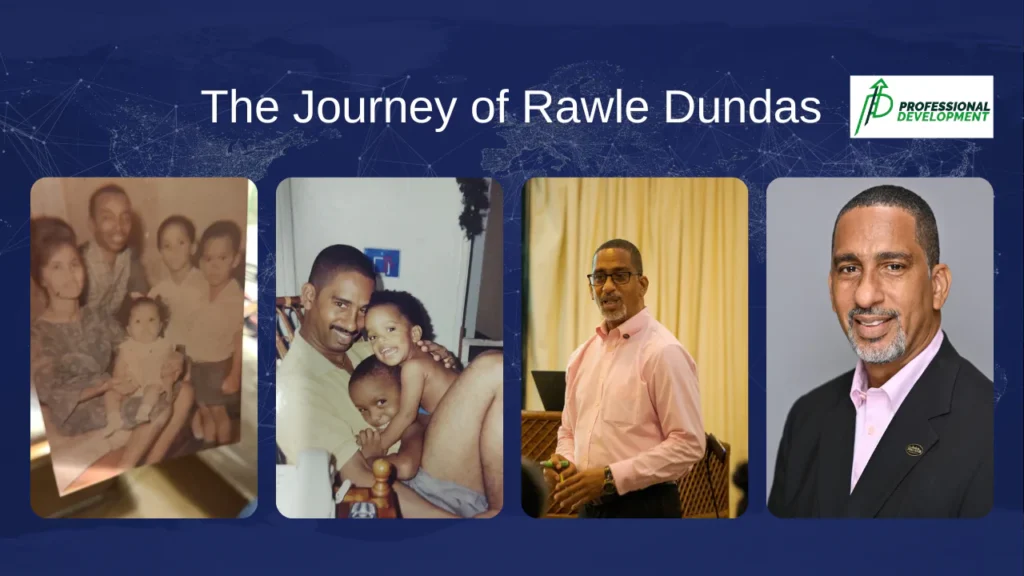
Childhood of Rawle Dundas Rawle Andre Dundas, born in Guyana on October 28th, 1965, shares his life story as a pastor’s kid, flight attendant, and husband with 5 children. His full name, Rawle Andre Dundas, includes the French name Andre, meaning “manly,” he is particular about accentuating the E. Throughout his professional life, he predominantly uses the name Rawle. In more personal settings, particularly from primary school and growing up, he is affectionately called Andy by those who know him well, whether from church or childhood. His father is Rufus Leon Dundas (88) and his mother was Hycinth Dundas. He recently realized that he may have relatives in Suriname when someone bearing his mother’s maiden name, Pickering, reached out to him. Rawle was born in Georgetown, Guyana, and lived there. Rawle Andre Dundas has had the opportunity to travel around the world as part of his first job where he served as a flight attendant from 1984 to 1997 on board the national airline. While working, he also pursued his education, growing up before entering the Adult world. Rawle was deeply involved in church activities, being the child of a former pastor. He actively participated in youth leadership from his teenage years and held the position of head prefect at his high school. A reserved individual by nature, Rawle is quick to step in and help when there is a need or opportunity. Rawle has a happy marriage with his wife, who is in the US while he resides in Guyana. They plan to establish a base and retirement platform in Guyana within the next two years. Despite the distance, they maintain frequent communication and travel back and forth. Rawle, also known as Andy, has four children and one stepchild from his wife. Rawle has siblings and is the second one of four children. His older brother is Leon and he is currently residing in the UK. After a year Rawle came along, Then there’s Denise Bonita, the only girl in the crew and the last sibling is also a boy. Around 2015, they established a family WhatsApp group to stay connected because his brother initially resided in Jamaica, and his younger brother was in Canada. With family members spread across the USA, Grenada, and the UK, they would often visit each other every year or every other year. While they conversed every week, the primary purpose was to foster good communication and maintain strong family ties. Growing up as pastor’s children, many of their activities revolved around the church. With two services on Sunday, occasional Sunday afternoon events, Wednesday and Friday church services, and Saturday visitations, their schedule was quite busy. Despite the church-centered lifestyle, their parents ensured they had a social life, allowing them to engage in sports like cricket, badminton, athletics, and some football. Rawle did not pursue music, but his siblings were musically inclined, with one playing the drums and the others excelling in singing and playing instruments. Family gatherings and activities were common during holidays, creating a strong feeling of unity. As they grew older, Rawle developed a love for leadership and, despite not being very outgoing, he would step in when he saw a need. At the age of 17 or 18, he became the vice president of the Youth Society for the country’s churches, leading to a significant trip to Mexico in 1983. This international experience exposed him to different cultures and perspectives, fostering friendships with people from around the World. To fund the trip, Rawle’s group organized various activities, including grass-cutting, selling secondhand clothes, holding fundraisers, and organizing a concert. The experience not only enriched his life but also taught him valuable skills in planning, project management, and independence at a young age. Despite a tempting proposal to stay in the US during the return journey, Rawle’s commitment to his promise and responsibility to bring back what he learned led him back to Guyana to serve the church. This experience marked a transition out of high school and into the World of work, providing important lessons that shaped his life. Rawle and his team did not have the word “entrepreneurship” back then. However, as he discusses entrepreneurship now, it becomes apparent that they were entrepreneurs at that time. They did not receive sponsorship from churches, banks, or large organizations. Instead, they had to find a way to generate the necessary funds. Rawle and his team engaged in sales, particularly clothing and food, successfully raising the money required to independently travel to Mexico. In the realm of academics and extracurricular activities, Rawle reflects on his experiences, carefully choosing the term to convey that it wasn’t just about fun but also involved significant learning. With a mother who was a teacher, emphasis was placed on completing tasks diligently, striving for excellence, and excelling in school. Primary school, covering grades one to five, proved relatively easy for him, who emerged as a top performer. Transitioning to high school brought new opportunities, sparking excitement about involvement in drama, class leadership, athletics, and even joining the first boys’ choir in the school. Throughout high school, Rawle actively participated in class and house leadership, showcasing his versatility. In the highest level, sixth form, he was elected as the school’s head prefect, indicating his successful engagement in leadership roles. Despite not always performing at the highest level academically throughout high school, Rawle learned valuable lessons. In one term, he did not perform well due to a lack of focus, but the experience taught him the importance of applying oneself. Realizing the need for focus and effort, he bounced back and succeeded in subsequent years. This taught him the crucial lesson that results don’t happen automatically; one must work toward them with dedication. His Impact At the age of 18, Rawle had his first unplanned entrepreneurial venture, gaining valuable lessons from the experience. Despite his parents not being inherently entrepreneurial, he acquired the basics of money and systems management from his methodical father, who held an office admin manager
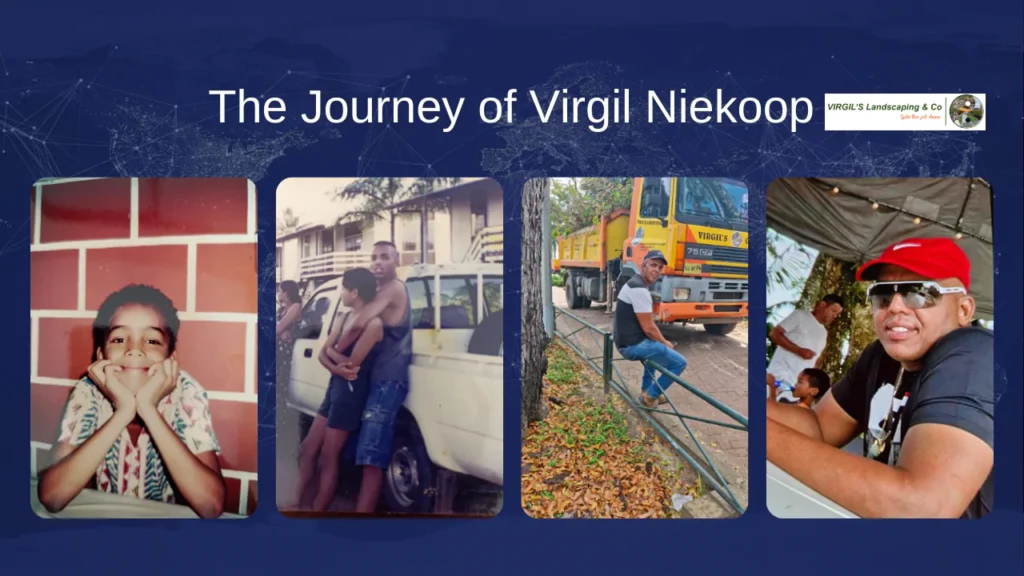
Childhood of Virgil Niekoop Virgil Niekoop was born on January 9, 1981, in Paramaribo, Suriname. His father, Mario Niekoop, worked at the Hospital (A.Z.), and his mother, Carmen Niekoop-Veldkamp, worked at the insurance company Assuria, formerly known as NEN. Virgil has a sister, Serafija Niekoop, who was crowned Miss Suriname in 1999. The bond between Virgil and his sister is very harmonious, and they always support each other, no matter what. Virgil describes his childhood as very good and peaceful. He was raised in a complete family where his parents were always together. Virgil grew up on Joerawanstraat in Uitvlugt, which was an intimate community (close-knit). He often visited his grandparents at Reeberg (Reeberg is situated near the village Koewarasan in Suriname), which he always looked forward to. At Reeberg, his grandfather was involved in livestock farming and planted Brazilian papaya, which he was the first to introduce in Suriname. Virgil was partly raised by his paternal grandmother, Grandma Ilse Niekoop, who lived in Limesgracht. He spent part of his youth with her as well. Some highlights of his childhood include prankish playful activities he engaged in at the Rodastreet, such as transferring fish from the gutter to his father’s aquarium and catching birds. During New Year’s, chicks were also cruelly killed with firecrackers. But these were all typical childhood activities in which he engaged. At Bernadette School, he was quite a difficult (troublesome) boy and didn’t receive the attention he truly needed. He was seen more as a difficult child seeking attention, which was perceived as troublesome by the teachers at the school. At a young age, Virgil experienced bullying at school he was placed in the “slow” row by the teachers instead of being treated like everyone else. This led to him seeing a psychologist as a young boy. The psychologist provided the necessary support, even visiting the school and informing the teachers of the pedagogical skills that needed to be applied. Despite some improvements, there were still issues with the director of the school. As a precautionary measure from the psychologist, Virgil was transferred to Petunia School. There, the treatment was more pleasant, because as a child, he finally received the attention and support he needed at school. This resulted in him completing classes from the fifth grade of GLO to NATIN, where Virgil studied Land Surveying. His Impact Every weekend while Virgil was a 15-year-old NATIN student, he worked by mowing his neighbors’ gardens. He gathered his school buddies every weekend to work together and earn money because he loved to maintain gardens. Virgil continued to attend school and did this on the weekends and vacations for four years. Virgil requested his mother’s permission to take a year off from school after finishing NATIN so he could explore what he could accomplish with gardening. After working once a week for his own money, now 23 years later, he is a master of his field. It all began for Virgil as a young boy, maintaining his own garden at home, until a neighbor asked him to do hers too. After completing the work, he was rewarded with 1.50 guilders. At the time, that was worth a lot. This reward inspired Virgil that by mowing verges and maintaining gardens, he could earn his own money, so he began mowing verges for neighbors. The payments ranged from 2.50 guilders to 3 guilders, and the most he ever received was 9.50 guilders. In addition to earning money, Virgil was also inspired by his late Guru, his uncle Hesdy Veldkamp. He was fascinated by the way his uncle designed gardens. Uncle Hesdy inspired Virgil by giving him a brushcutter at the time. From a young age, Virgil’s motto was ‘ease serves humanity,’ and he differentiated himself from other gardeners by completely clearing away all weeds and leaving the gardens or verges completely neat and organized. That was the inspiration for Virgil to start a cleaning company, where he would tell his clients to sit back, relax, and work until the customer’s satisfaction was fully achieved. He goes the extra mile to satisfy his customers. Virgil’s Gardening has recently undergone a name change and is now operating under the name Virgil’s Landscaping. The services encompassed by landscaping are quite extensive, and over the years, Virgil Niekoop has expanded his operations. They now offer various services such as garden architecture, earthmoving, planting, delivery of sand types, tree pruning, heavy equipment rental, and more. Growth through experience Virgil’s main goal was to generate publicity in order to increase the popularity of his business. Branding every business equipment in his possession the same color was one of his strategies. This helps differentiate Virgil’s Gardening cars and trucks from others because of their orange-yellow color. The company’s achievements are also related to the way its colors and brand have been seen over time. This presents his abilities and creates a unique brand for him in the community. Getting 600 clients in a month was one of the highlights of Virgil’s Landscaping experience. Since COVID certain tasks have shifted, so there is now less garden maintenance and more focus on heavy equipment as part of the expansion of the business. Another growth aspect that came over the years is that currently, Virgil’s Landscaping has about 30 employees. Finding and attracting the right employees to provide the same quality of work for which Virgil’s Gardening is known for has proven to be one of the company’s challenges. It has been discovered that sometimes the given work does not meet the company’s criteria for quality. Another unpleasant work-related incident that Virgil experienced was breaking his nose when a tree branch fell on his neck when he was chopping it. On another occasion a little miscalculation led to damage to a customer’s roof. He was compelled by all of this to obtain accident insurance coverage for the business but never gave up his faith. Closing Remarks Virgil Golden Rule: Trust your abilities, have faith in yourself, and pay attention
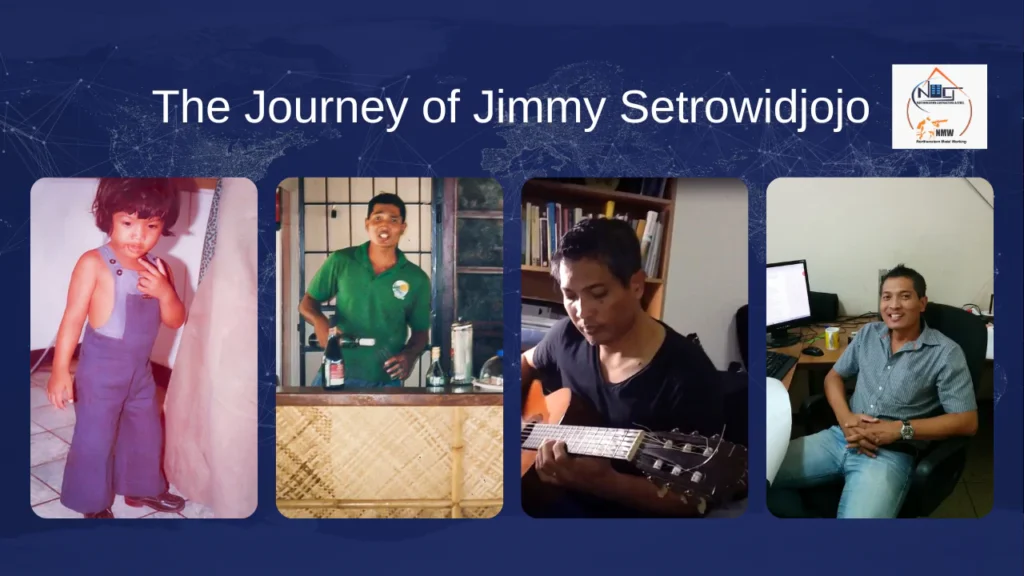
Childhood of Jimmy Setrowidjojo Jimmy Setrowidjojo was born on January 27, 1977, into a family that had five children total, four of whom are still living. He is the brother of two brothers and and two sisters, one of the brothers being deceased. Noermie Soetodimedjo and Ruben Setrowidjojo, who held the position of Minister of Social Affairs during the 1980s, are his parents. Jimmy has two kids with his wife. Jimmy didn’t truly grow up with his biological siblings because his parents were divorced. He maintains a strong relationship with his siblings, although they don’t get to see each other as often as they would like. Jimmy is an Associate and a member of the executive board at his church, the ”Baptistengemeente Vrije Evangelisatie”. Like any other student, his enthusiasm for school was mostly focused on recess. He may have been among the high scorers if he had put in more effort. After attending St. Ignatius School, I.P.J. Berkenveld School, and NATIN, where he consciously selected a practical education path in civil engineering, he continued his study. With the exception of the latter, Jimmy subsequently did not finish his schooling at PTC. As one of PTC’s first students, he had to balance his education with his job. Because of his father’s international residency, he was able to study there. Jimmy’s desired job was to become an architect, but he was unable to fulfill this ambition for a variety of reasons, including his inability to further his education in the Netherlands. Jimmy has a background in civil engineering, having studied architecture. His journey began in an architectural firm and continued in construction contracting. In the past, Jimmy worked for the company ‘Bouwbedrijf van Kessel.’ Nowadays, it’s called Haukes Construction, as Haukes Construction acquired the company. Subsequently, he transitioned into steel construction. Additionally, Jimmy has experience in tourism, where he was responsible for maintenance, structures, and designing buildings at Overbridge River Resort for several years. Afterward, Jimmy joined an engineering firm where he spent 15 years honing his skills to become the professional he is today. Following his time at the engineering firm, Jimmy moved to his current position. His Impact He started off in the architectural industry at Architecten Buro Gonsalves en Partners. Bouwbedrijf van Kessel allowed him to be involved in the building of the Hermitage Mall. He moved on to a construction company after leaving Bouwbedrijf van Kessel, where he worked for eight months. After that, he traveled to Overbridge River Resort, where he spent four years using his talents to design and build the complex’s homes, huts, and cabanas. He finally made it to the Civil Engineering Firm (IBT) after around 4 years. He acquired experience and practical understanding about the fundamentals of his line of work there. He worked on projects for Staatsolie and N.V. Energie Bedrijven Suriname in addition to designing, drafting, and constructing the Finabank on Dr. Sophie Redmondstraat. This talented individual views the director of the company as a great mentor, and he attributes his skill development to him. He is currently a Project Manager at Northwestern Metal Working and Northwestern Contractors & Steel, where he is in charge of day-to-day operations. As a Christian, Jimmy values belief in the Creator immensely. He holds a Bachelor’s in Theology from Suriname and plans to pursue a Master’s in Theology to deepen his understanding of the subject. Growth through Experience Jimmy has encountered some challenges in his business dealings. As a result, he has gained the capacity to manage them. At first, he prefers to figure things out on his own. The issue is that he tries to tackle everything by himself before seeking help. This has in the past occasionally led to conflicts with coworkers and/or projects. There have been moments when it got worse, which caused problems for him. But while Jimmy develops this characteristic, he’s also learning how to deal with it and realizing that he can’t do everything on his own and that he needs to appreciate and trust other people for their abilities. A problem with projects could be that they are not completed in the specified time frame. Jimmy remains challenged with communication, something he is working on to improve in order to establish lasting relationships with stakeholders and partners. The number and size of the projects at Northwestern clearly reflect the institution’s growth. There has been a noticeable rise in the number of projects after the disruption brought on by COVID in previous years, which led to project blocks. Closing Remarks from Jimmy As a believer, it is very important for Jimmy to start everything he does, even his day, with the Lord Jesus Christ. As a human being, it is important to be honest at all times. Try to do everything from a pure heart, knowing why you are doing it. Besides doing it for yourself, you also do it for others and the next generation. Try to think of your fellow human beings in everything you undertake. Especially consider the long-term consequences and the sustainable developments or solutions that the actions bring about. Let us do everything from a pure heart. Not everything revolves around money, and it is important to know that well-being is more important than wealth in terms of finances. Wealth can certainly contribute to well-being, but we must not lose sight of the fact that well-being is above wealth if we want a healthy community. It is important to find satisfaction in everything we do. Success is not only measured by quantity. Rather strive for excellence than what humans consider success. Entrepreneur’s Impact Entrepreneur’s Impact: Your weekly source for entrepreneurial stories, insights, and inspiration by OneShot International. Join us for impactful founder stories. expert advice and solutions to global issues. Stay tuned for our weekly blog covering Entrepreneur Impact, Ideas & Opinions, and News & Media. Thank you to our OneShot community. Don’t miss our next story next Sunday! Visit the digital platform here www.oneshot.sr, and join the International community of entrepreneurs
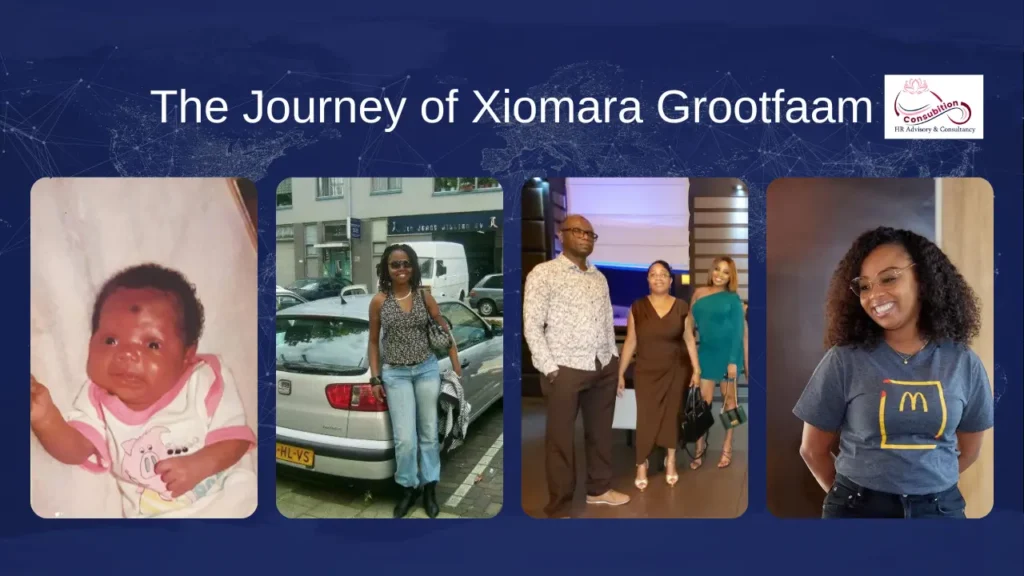
Childhood of Xiomara Grootfaam Think like a queen. A queen is not afraid to fail. Failure is another stepping stone to greatness. – Oprah Winfrey Xiomara was born on August 25, 1990, in Paramaribo, Suriname, to Joan Sanses and Carlo Grootfaam. She has one brother, Moreo Grootfaam. One of her favorite quotes is from Oprah Winfrey: “Think like a queen. A queen is not afraid to fail. Failure is another stepping stone to greatness.” Xiomara adds her perspective to this quote, saying “Never a failure, always a lesson.” Oprah Winfrey is one of her role models, particularly inspiring due to her journey from humble beginnings to remarkable success. Xiomara had a joyful and nurturing childhood, with ample opportunities for self-discovery and personal expression. Growing up with her brother, Moreo, was lively and educational, as he instilled in her the importance of speaking up and advocating for herself. Although they often clashed due to their contrasting personalities—Moreo’s stubbornness versus Xiomara’s assertiveness—their relationship was filled with playfulness, such as recreating stunts from Nintendo games in real life. During her youth, Xiomara was actively involved in various activities that shaped her character. She participated in the Boy Scouts, where she learned discipline and strength. Additionally, she played volleyball for 11 years with the Volleyball Association Yelyco. Xiomara demonstrated her commitment and loyalty by keeping her commitment to her associations Through the Boy Scouts, she underwent lifeguard training and was even selected to participate in a swimming marathon after rigorous training spanning six months. However, she faced a setback when a medical test revealed low iron levels, disqualifying her from the marathon despite her dedication. Xiomara’s academic journey commenced at Julius Lobato School, followed by E.B.G. MULO Ritfeld School, and she continued her education at Mr. Dr. J C de Miranda Lyceum, also known as Lyceum. Subsequently, she pursued studies at the Anton de Kom University of Suriname, majoring in Public Administration, and completed her Master’s Degree in Human Resource Management at the FHR Institute for Higher Education within the nominal time. Her academic achievements reflect her determination and focus on success. Her Impact Xiomara’s professional journey began with a summer job at a well-known commercial bank in Suriname, Hakrinbank. She valued this temporary role as a significant opportunity, considering the skills she acquired, which she believed were applicable in various settings. The diverse experiences and skills she gained made her eager to return to work during breaks. She then transitioned to a sales role at a Digicel Shop and later worked as a Call Agent at Telenamic, focusing on developing essential soft skills such as patience, stress management, teamwork, and conflict resolution. Afterward, Xiomara served as a Public Relations Officer at the NGO Stichting Liefdevolle Handen, which supports women facing socio-economic challenges. Here, she had direct access to her research demographic for her thesis at Anton de Kom University. Her responsibilities included policy writing for public relations and leading a team. Despite the economic crisis of 2015, she persisted in her career aspirations, enduring three months without pay. Following a period of unemployment, during which she pursued hair braiding as a side business, Xiomara joined Republic Bank through a Christmas Project initiative, leveraging this opportunity to showcase her capabilities and negotiate a contract position. At the time, banks collaborated with staffing agencies, resulting in her initial one-year contract. Xiomara strongly criticizes the treatment of temporary employees, equating their conditions to modern slavery, given their equivalent workloads for significantly reduced pay. Despite her adaptability across departments at RB Bank, her efforts were not reflected in her earnings. Later, Xiomara returned to Hakrinbank as a temporary employee, initially earning less than her previous role. However, advocacy for better conditions led to improved compensation, doubling her earnings from Republic Bank. At Hakrinbank, she worked in the Credit Department while concurrently pursuing her Master’s degree, which emphasized practical applications. For a certain period of time s also worked at a group of companies in Commewijne where she excelled as a Human Resource Officer until the company’s closure, leaving her unemployed for several months. Following this, she briefly taught at FHR and now serves as the Human Resource Manager at McDonald’s in Suriname. Additionally, she lectured at the FHR School of Business, specializing in Professional Development, Project Management, Competence Development, and Internship Supervision. Xiomara never gets away from challenges. Even when it’s not directly in her field, she embraces them because she believes in the value of being broadly skilled and versatile. Do you believe in coincidence? From her final year of high school, Xiomara was determined to study Children’s Rights. During that time, the term HRM had just been introduced in Suriname, sparking her interest despite her initial uncertainty about its meaning. In the same year, she attended a Youth Information Fair to explore post-secondary options. It was there that she learned about opportunities from the University (then known as the Hogeschool in Holland, now FHR). The information she received from FHR immediately captured her interest. The university offered HRM as part of the Public Administration program. However, the classes at the Hogeschool were held in the evenings, conflicting with her sports commitments. Despite this, Xiomara was drawn to Hogeschool in Holland because she believed that an international diploma would open doors globally. After discussing with her parents and carefully considering her options, she enrolled in Public Administration at Anton de Kom University of Suriname. Over time, she grew to enjoy the program, despite the realization that HRM was just one subject within it and not a specialization. She completed her studies within the expected timeframe. The desire to study Human Resource Management never left her. In pursuit of her goal to earn her Master’s degree by age 30, Xiomara applied for Public Administration at FHR. Upon passing the entrance exam, she was accepted into the program. However, personal circumstances and financial challenges led her to withdraw from the program. Impressed by her credentials and motivation, the institute’s leadership invited her for a meeting with Mr.

Learn the exact revenue of several Udemy instructors in different course topics. Learn how to find the potential revenue for your topic on Udemy. If you are thinking about becoming an online course creator, you’ve no doubt come across Udemy – the largest online course marketplace in the world. You are probably wondering if teaching on Udemy would be a good place to start your online teaching career. To help you answer these questions, we are going to present you with the Udemy earnings of several online instructors who have been kind enough to share their revenue with the public. Besides presenting the Udemy instructor revenue of some well-known instructors, we are also going to show you some internal Udemy tools that will help you have a better idea of what revenue you can expect for your course category. So, how much do Udemy instructors make? An Udemy instructor can make anywhere between $1000 and $3,000,000 in lifetime earnings, depending on the number of courses they produce, the size of their audience, the quality of their courses, and how long they’ve been on the platform. Depending on these factors some instructors make hundreds of thousands of dollars or more per year, while others just make some extra pocket money. As you can see, there is a wide range of revenues on the platform. So if you start teaching on Udemy, what can you expect? That’s what you are going to find out in the rest of this post. If you are looking to learn more about how to create and sell online courses, both on Udemy and outside of it, here are two main guides that I wrote on the topic: How To Create An Online Course (Complete Guide, PDF Included) How to Sell Online Courses? The Ultimate Guide You can also check out all the free guides available here at the Course Creator Academy by clicking on the Academy link on the top menu bar. Here are other Udemy-related posts that you might be interested in: How to Make Money on Udemy? Is Udemy Worth It For Instructors? (Instructor Opinion) Udemy vs Skillshare for Online Course Creators How to be Successful on Udemy Udemy Alternatives (For Selling Online Courses) How Does Udemy Work? As the largest online course marketplace on the planet, Udemy has a few standout statistics: 49+ million learners 64,000+ instructors 185,000+ courses 680+ million course enrollments 10,500+ enterprise customers And courses shared in 75 languages and across 180+ countries Founded in 2010 by Eren Bali, Gagan Biyani, and Oktay Caglar, Udemy has gone on to become one of the most recognizable names in the eLearning space. Each year, it pours millions of dollars into marketing, reaching new students and course creators from around the globe. It’s a platform that I found several years ago and have had some success in it since, as I will talk about later on. For many course creators, it’s a platform worth considering—as I explore further in this separate review: Udemy vs Skillshare for Online Course Creators. If you want to learn if Udemy is the right platform for you, then check out this article – Is Udemy Worth It For Instructors? (Instructor Opinion). How Do Instructor Earnings Work on Udemy? There are currently a couple of ways of selling courses on Udemy: Become a Premium Instructor and sell courses via one-time sales Get invited to join Udemy For Business Udemy For Business is still relatively new and it’s invitation-only, so let’s focus on that in a second. First, let’s explore the more traditional way to earn money on Udemy, as a premium instructor. Becoming a premium instructor is both free and simple (usually taking just a few days—click here to learn more). Once accepted, you can create, publish, and sell your courses via the Udemy Marketplace. How you then get paid is simple enough: Any sales via your referral link/code = 97% of the sale value Any sales that don’t come from your referral link/code = 37% of the sale value. As an Udemy instructor, you’re given a unique referral code/link that you can share with your audience via your website, email, social media, etc… This means if you have a $100 course and someone purchases it through your referral code/link, you get $97. But if someone finds your course through the Udemy Marketplace, you get $37. In addition to this, if your courses stand out on the platform, they might be selected to join the Udemy For Business program, which is aimed at organizations. In short, most Udemy courses are sold on a one-to-one basis. But Udemy For Business is a subscription model, allowing teams of employees to access lots of courses for one monthly fee paid by their employer. What this means for you as a course creator is you’re paid based on how much of your content is consumed each month. This starts with the Udemy Fund, which is 25% of all revenue from UFB. The more people who join Udemy For Business, the larger this fund becomes. You’re then paid based on the level of engagement your course(s) receive that month (watch time). For example, if you receive a total engagement of 1% across all Udemy For Business students, you receive 1% of the total fund. What Percentage Does Udemy Take From Instructors? There are pros and cons to both Udemy for Business and their Premium Instructor programs. Before you go any further, I encourage you to explore these more in-depth documents: Udemy’s Premium Instructor Revenue Share How To Earn Money From Udemy For Business I also explore these pros and cons from an instructor perspective via the guide: Udemy vs Skillshare for Online Course Creators How To Know the Revenue Potential For a Course Topic on Udemy? You can have an idea of the potential revenue of your course category on Udemy by using some of their free tools. My recommendation is you spend a little time studying Udemy’s Marketplace Insights tool. I love this tool. It’s one of the best features
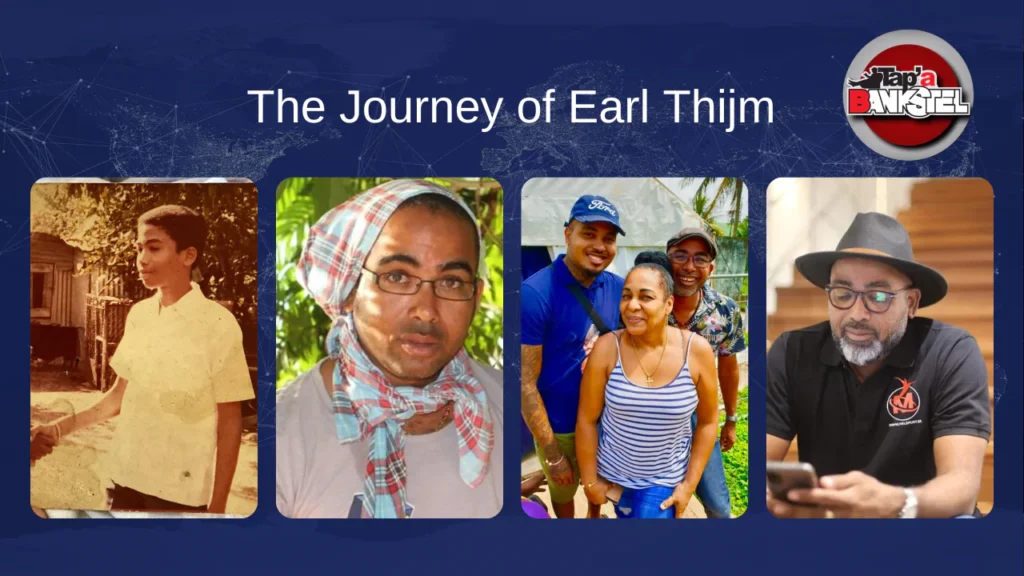
Childhood of Earl Thijm “Do what you say, then you won’t lie.” Earl Thijm was born to Ursila Norine Thijm and Henk Blijd. He grew up with a stepfather, Edmund Neijman, who played the role of father and father figure to Earl and his siblings. Earl Thijm, also known as Simpel, was born on August 22, 1971. He is a husband to an amazing wife, a father of two children, and a grandfather of one grandchild. Earl comes from a family of nine children, consisting of 2 girls and 7 boys, two of whom have passed away, including his twin pair. It was a challenging time for him, but ultimately Earl was able to find closure and move forward with life. As a brother, he witnessed firsthand the suffering his brother had to endure. The suffering was heavier than his brother’s passing. Thus, the family had to make a choice about what was best for him at that time. Seeing someone suffer is worse than seeing them pass away. Earl grew up in Kwatta, a neighborhood in the West of Paramaribo, the capital of Suriname, and enjoyed his childhood years there. Kwatta was a peaceful neighborhood that was quite livable. Alongside neighborhood friends, he played house, stole fruits, pocketed items from stores without the shopkeeper noticing (since there were no cameras back then), and occasionally skipped school. Earl lives by the quote, “Do what you say, then you won’t lie.” He values this because he believes it’s important for people to keep their word. Just do what you say, and then you won’t lie. If you’re not going to do it, don’t say it. His hobbies include watching TV and being in nature. Earl practiced karate in the past and occasionally played soccer, although not on a team. His educational journey began at Aloysius School, then St. Vincentius School, Wulfingh School, and KuldipsinghSchool. He then attended Cabelschool, IMEAO, and finally Surinaams Pedagogisch Instituut (SPI). He was placed in the transition class at IMEAO, which he did not complete. At that point, SPI was the only option. He continued at SPI until the second year, also serving as a class representative. He was very energetic and cherished his school days. If he could turn back time, he would still be in school. He particularly enjoyed his high school years and had a great relationship with his teachers. While home offered a different upbringing, school provided a lot of freedom, and he caused quite a bit of mischief during his time there. His Impact Earl’s journey began with selling popsicles at the same pedagogical institute where he was a student. While waiting for a call from the Suriname Police Corps, where he had applied, he started selling popsicles to support himself. Often, God has a different plan for our lives; things don’t just happen by chance. Despite passing all the tests, Earl was never called by the Suriname Police Corps. During this wait, the Bonjo Boys group emerged as a football team and later transitioned into a music group. Earl was never one to sit idle. He always wanted to do something. To support his family, he began making and selling popsicles. Eventually, he became an artist, writing, recording, and selling songs with his best friend in the Bonjo Boys. In their prime, the group embarked on a tour to the Netherlands, which unfortunately failed due to the organizer’s different intentions. After the tour, the band broke up, and Earl had to find a way to support himself. To make ends meet, he worked as a gas station attendant and later at Kasimex, a trading company in Kwatta. He then moved to a lottery office before starting to rent sound equipment to bands needing to perform, which led to the creation of ‘Tap A Bankstel.’Through ‘Tap A Bankstel,’ Earl honors and values individuals who have gone through significant life experiences to reach where they are today. Drawing from his own struggles, Earl understands the importance of recognition and experience when striving for personal growth and future generations’ well-being. He acknowledges that even those in high positions faced challenges on their journey. The program’s ‘lighthearted’ conversations allow Earl to better understand his guests and the struggles they’ve endured. It aims to introduce the person behind the title, approaching guests informally. This platform fills the void of recognition sometimes missing in their immediate surroundings, providing an opportunity to know the individual behind their accomplishments.Since his youth, Earl has had a close friend, Steven ‘Wesje’ Westmaas, with whom he founded the Bonjo Boys. They discussed everything and learned a lot from each other. Sadly, Steven passed away tragically on April 23, 2011, which was a profound loss for Earl. One lesson Earl carries from his friend is leaving a mark wherever you go so people notice and remember you. Earl made his mark with the program he started, which is now a social foundation and led to the creation of Simply, a sandwich restaurant that serves breakfast and more. Growth through Experience As a young and inexperienced newcomer, Earl Thijm embarked on a new TV program—an innovation both for himself and for Suriname. During that time, a gossip website named Mamjo was actively discussing him and his program. He was the subject of gossip, most of which was critical of his methods, style of questioning, and the program’s general originality for Suriname. . Many felt his questions were too bold, with one of the harshest criticisms being, “Even my six-year-old daughter could ask better questions.” Initially, dealing with this criticism was quite challenging for him. However, it profoundly impacted him, prompting Earl to learn how to handle criticism and master the craft of hosting. Earl began his journey with Louis Vismale, who believed in him when no one else did and provided crucial support. The director of SCCN Television Station shared this belief in Earl and the potential success of his program, granting him three months of free airtime purely out of faith
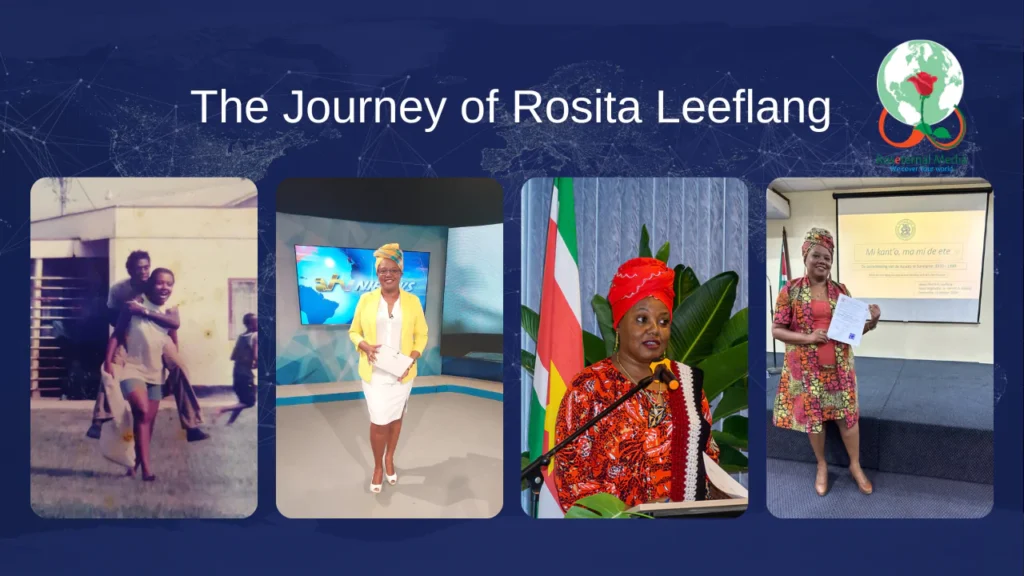
Childhood of Rosita Leeflang Rosita Leeflang is a journalist, an entrepreneur, and most recently, a junior historian. She was born on July 14th, the daughter of Erwin Leeflang and Elisabeth Lynch. Growing up, Rosita lived in a home with her mother, who looked after seven children: three girls and four boys, one of whom has since died. Rosita frequently uses the word “IMPOSSIBLE” in her presentations. She translates it as “I am possible” and uses it as inspiration to prove to others that she can achieve their seemingly impossible goals. She enjoys reading, traveling, listening to music, traveling with friends, and interacting with people in person. Rosita was raised in Flora-A and had a colorful upbringing. Her mother constantly met the needs of the kids despite having little money. The youngsters treasured the clothing Elisabeth sewed every day and thought it was the most beautiful thing in the world. Playing outside was a common part of childhood, and there was always food on the table. When they could afford it, she inspired and encouraged the kids to do well in school. Rosita grew up spending her summers with her father, a builder, who frequently brought her along for the ride in the back of his pickup truck. She climbed trees in the forest with her brothers and the boys from the neighborhood. That was one of the fun parts of her childhood. Rosita attended St. Jozef Girls’ School on Johan Adolf Pengelstraat, which later became a school that was open for everyone. She attended the Algemene Middelbare School (AMS) after finishing her studies at the W.J. Ritfeld School. At the elementary school she had the honored role of a traffic warden, stopping cars so children could cross safely. Another fond memory were the annual trips to Kraka. Rosita was also part of the school choir. On December 8, 1982, the choir was scheduled to perform at a school choir festival in the Ismay van Wilgen Sports Hall. Her mother had made a beautiful blue ball dress for her. Determining to take part in the festival, she decided to walk to school that morning after discovering that no buses were running. She was sent back home by a woman who stopped her along the road. She returned with tears in her eyes, to find her mother relieved to see her after the devastating events during that period. Despite being told, she didn’t quite understand what was going on at the time. She experienced secondary school as a great experience as well. Her high school at the Algemene Middelbare School (AMS) was so fun that it took her 5 years to complete a 3-year program. She made lifelong friends there. Her motto in school has always been to finish what she started. Her Impact Rosita’s very first job came just 2 weeks after she graduated from high school. She started at the headquarters of Hakrinbank in the foreign department. In those 8 months, she discovered that working in a financial institution was not her calling. Rosita and finances have a love-hate relationship. Despite others considering her crazy for leaving what was seen as a good job at the time, she decided to quit after 8 months. She then moved to the Pater Ahlbrinck Foundation; a non-governmental organization dedicated to the development of people in the interior. During her time there, the organization worked extensively with Haitians migrating to Suriname to live and work, helping them find their way in the country. Through this close collaboration, she gained more respect for those coming to Suriname from abroad. Rosita spent a year with the foundation and then found herself unemployed for two months. During this period, her mother advised her to apply to the Suriname Broadcasting Foundation (SRS), as her mother listened to SRS all day, every day. This led to a heated debate between them, which her mother eventually won. Two months later, her mother, in true Surinamese fashion as Rosita describes her, asked about the status of her application and whether she intended to follow through. After following up with SRS, it turned out they never received Rosita’s application letter. She had to start the process over and write a new letter. Eventually, she was hired on the condition of two months without pay since she was new to the job. Within a month, Rosita proved she had sufficient skills to be paid. This marked her first media job. About 25 years ago, she was asked to present the news at the General Television Station (ATV). Later, she was invited to work at one of the largest newspapers at the time, ‘De Ware Tijd,’ where she remained for eleven years. At one point, the director of De Ware Tijd decided that all freelancers should work from home, allowing her a lot of free time. Roseternal Media was the name she had long envisioned for her company. After registering it with the KKF, she ventured into entrepreneurship without fully understanding what it entailed. Due to her passion for organizing, she transformed it into a production company. In 2025, Roseternal Media will celebrate its 15th anniversary. With her experience as a journalist, Rosita heard many complaints about disorganization in Suriname and misconceptions about how things were run. Through Roseternal Media, she aims to showcase the existence of quality organizations in Suriname capable of producing high caliber shows, concerts, and events, proving that professionalism is indeed present. Roseternal Media also contributes to Suriname by giving Kaseko a place in the music industry locally and globally. Rosita believes entrepreneurs should give back to the community and actively engages with youth, a longstanding commitment. Initially unintentional, her efforts to promote Kaseko led her to pursue further studies and encourage young people to explore their history. Apart from her media work, Rosita is deeply involved in social work through her foundation, Develop Art Foundation (DAF), and collaborates with friends on projects related to the environment and Kaseko through the Kaseko Foundation. Additionally, she volunteers at the St. Petrus

Digital Business: The Rise of Digital Learning and OneShot Platforms Introduction In the era of digital transformation, businesses are leveraging technology to create new opportunities and redefine their operations. One such area that has seen significant growth is Digital Learning. This blog post will explore the concept of digital learning and how the OneShot platform is revolutionizing this space. The Power of Digital Learning Digital learning is the use of digital technologies to create an educational environment where individuals can learn and grow. It has transformed the traditional classroom setting, making education more accessible and flexible. With digital learning, geographical boundaries are no longer a barrier, and learning can happen anytime, anywhere. OneShot Platforms: A New Era of Learning OneShot platforms are at the forefront of this digital learning revolution. They provide a platform where experts in various fields can share their knowledge and skills with a wider audience. These platforms are not just about consuming content; they are about creating a community of learners and educators. Become an Instructor on OneShot OneShot is always looking for passionate individuals who are eager to share their expertise and make a difference in people’s lives. By becoming an instructor on OneShot, you have the opportunity to reach a local audience and beyond. Teaching on OneShot is not just about imparting knowledge; it’s about inspiring others to learn and grow. Whether you’re an expert in coding, digital marketing, graphic design, or any other field, OneShot provides you with the tools to create engaging and effective courses. Conclusion The digital business landscape is ever-evolving, and digital learning platforms like OneShot are leading the way. By bridging the gap between educators and learners, they are creating a world where everyone has the opportunity to learn and grow. So why wait? Register as an instructor on OneShot today and start making a difference!